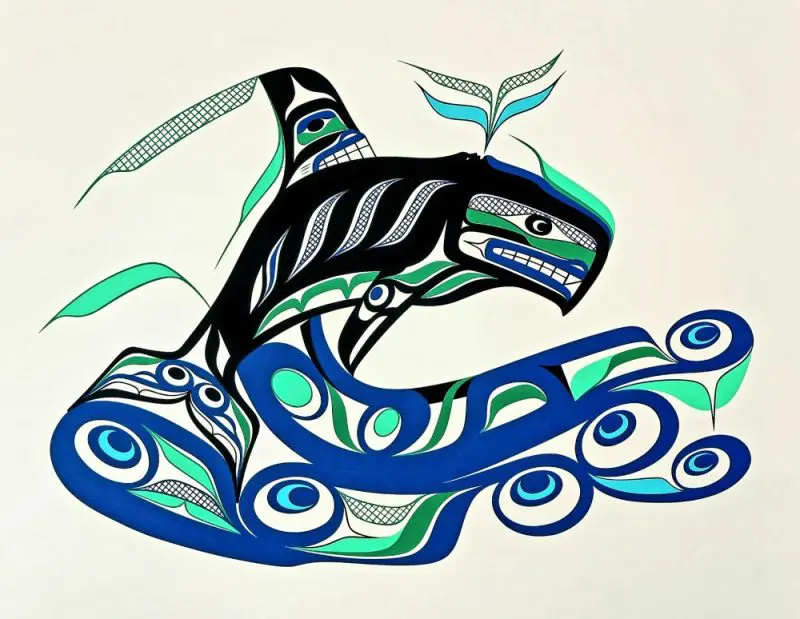
The Orca in Northwest Coast Native Art: Meaning and Symbolism
Introduction
The orca, also known as the killer whale, is a powerful and frequent figure in Northwest Coast Native art symbolism. It appears in both traditional and contemporary Indigenous artworks. Often associated with family, strength, protection, and ancestral connection, the orca reflects cultural knowledge shaped by ocean life, oral histories, and artistic lineage.
As with many Northwest Coast Native art symbols, the meaning of the orca varies depending on the Nation, story, or artist interpreting it.
Cultural Context and Regional Meaning
The killer whale appears widely across Northwest Coast Native art, with important distinctions among Nations such as the Coast Salish, Haida, Kwakwakaʼwakw, Tlingit, and Tsimshian. In many coastal communities, people view the orca as a protector of the sea and a symbol of family unity and leadership, reflecting the animal’s strong social bonds. In some traditions, people believe orcas embody the spirits of ancestors or serve as powerful crest figures connected to lineage and identity.
Orcas are revered for their hunting skills and sheer strength. They are also called sea wolves in some Northwest coast cultures. Similar to wolves, killer whales live and hunt in packs. The entire family, or pod, will normally stay together for life and work together to feed and raise their young.
Visual Characteristics in Northwest Coast Art
The orca is the largest predator on earth. As a result, artists in First Nations art often portray the orca as a powerful and intimidating being. This is indicative of the respect First Nations have for the killer whale.
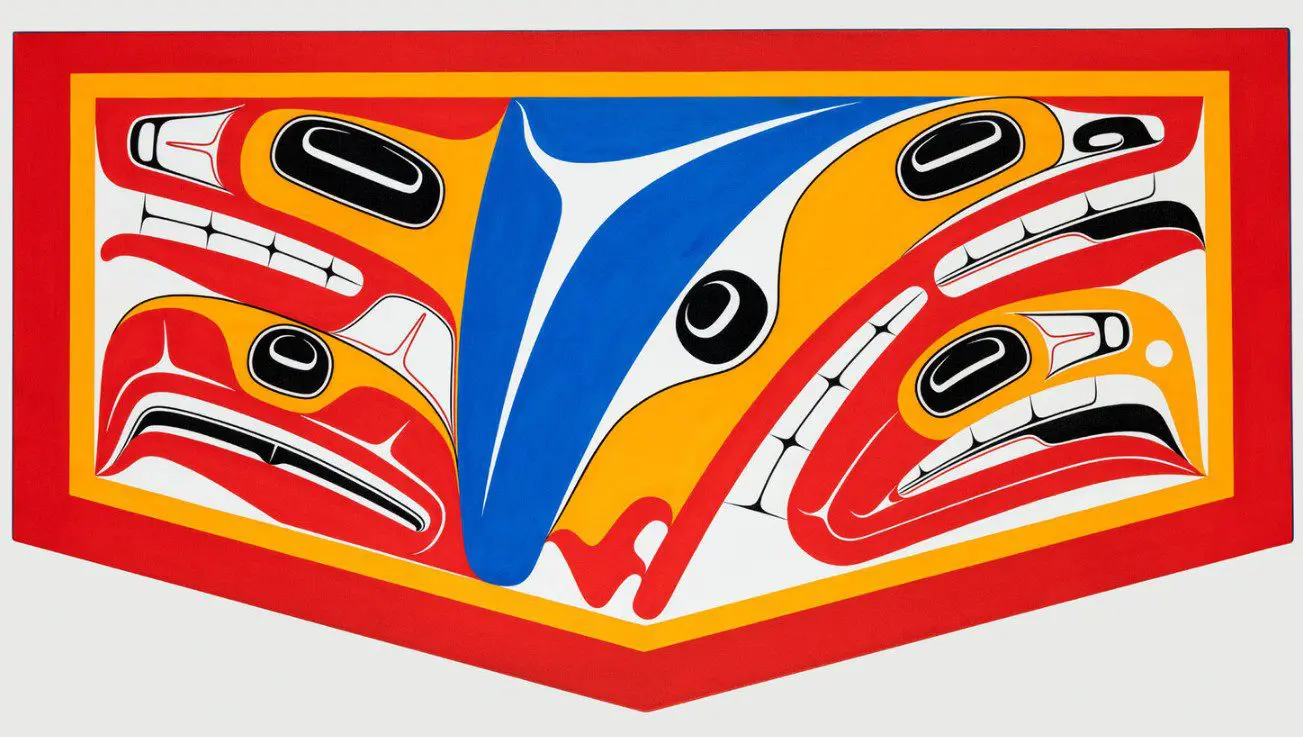
In formline design, artists typically portray the orca with a bold dorsal fin, strong curved lines, and prominent eye forms, often emphasizing its motion through water. Split-U shapes and flowing contours highlight the orca’s power and grace, making it immediately recognizable within Native art iconography and Northwest Coast design. These visual features appear across carvings, paintings, and screen prints, reinforcing the killer whale’s presence as a dominant sea figure.
Symbolic Themes and Interpretation
Orca symbolism is often associated with family, strength, protection, cooperation, and respect for ancestors. The orca’s close‑knit pod structure reinforces its connection to kinship and community. At the same time, its role as an apex ocean predator conveys authority and balance.
Contemporary Use in Indigenous Art
Contemporary Northwest Coast artists continue to feature the orca in modern works, including limited edition screen prints. These artworks honor traditional symbolism while exploring new forms, colors, and stylistic approaches. In doing so, they allow the orca to remain a living symbol within contemporary Indigenous art.
Collecting and Understanding the Artwork
Understanding the meaning of orca in Native art deepens appreciation for Northwest Coast artworks. Collectors who recognize the orca’s symbolic themes engage more respectfully with the culture and connect more deeply with the stories each piece carries.
Explore Related Works
Explore our collection of orca-themed screen prints and Northwest Coast artworks that highlight this powerful symbol in contemporary Indigenous art: Thunderbird and Killer Whale, K’aka’win
Related Reading
Native Art Symbolism: Stories, Meaning and Cultural Knowledge

Admin
Cedar Hill Long House Native Art Prints