The Raven in Northwest Coast Native Art: Meaning and Symbolism
Introduction
Raven is one of the most important and widely represented figures in Northwest Coast Indigenous mythology and art. Found in the traditions of many coastal First Nations—including Haida, Tlingit, Tsimshian, and Kwakwaka’wakw—Raven appears in carvings, masks, totem poles, jewellery, and contemporary prints.
More than a visual motif, Raven represents powerful cultural teachings. He is both creator and trickster, a figure whose actions shaped the world and whose stories convey lessons about human behaviour, morality, and balance.
Cultural Context and Regional Meaning
Across the Northwest Coast, Raven holds deep cultural and spiritual significance. In many communities, Raven serves as a crest figure, symbolizing family lineage and ancestral identity. Crests appear on ceremonial objects, totem poles, regalia, and house fronts, marking connections to clan histories and inherited rights.
Raven stories are central to oral traditions that explain the origins of the world and humanity. In Haida stories, Raven discovered the first men trapped inside a clam shell and freed them into the world. He later released the first women from another shell and brought the two together.
Raven is also credited with bringing important resources to people. In one well-known story, he stole salmon and placed them in the rivers along the coast so communities would have a reliable source of food.
Perhaps his most famous act is stealing the sun, moon, and stars and placing them in the sky, bringing light to a once-dark world.
Visual Characteristics in Northwest Coast Art
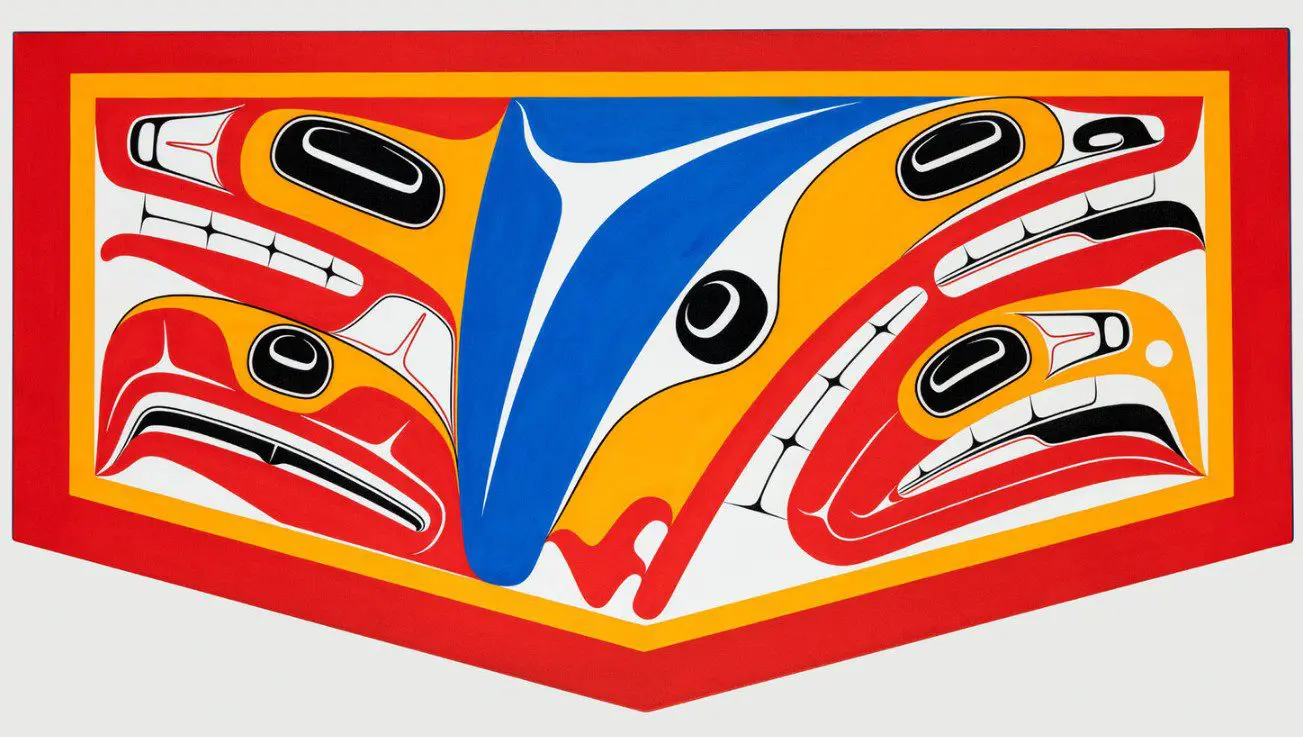
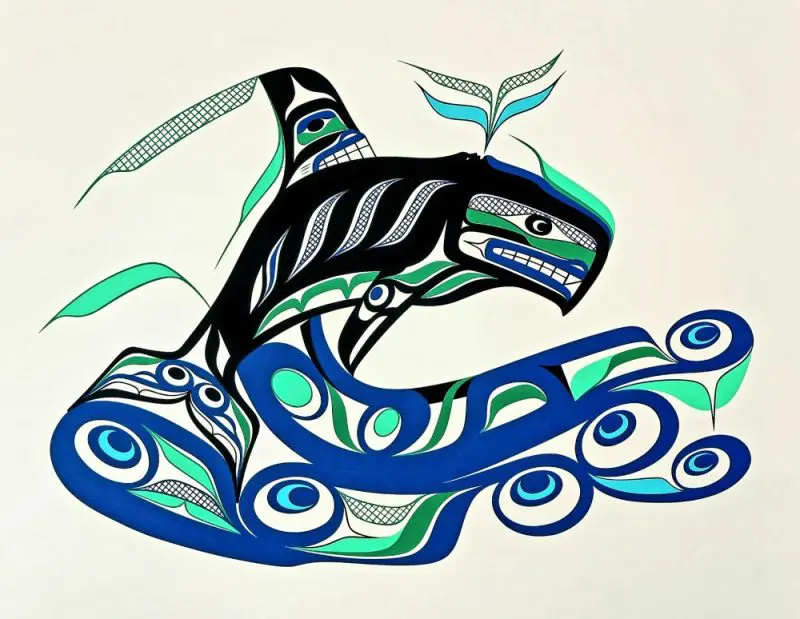
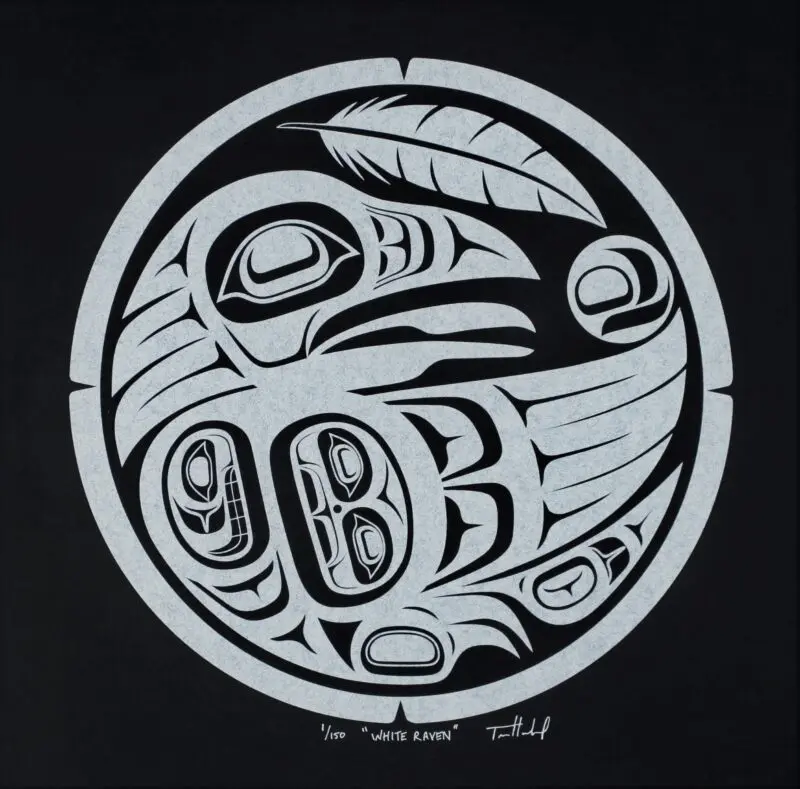
In Northwest Coast art, Raven is depicted using the distinctive formline design system. This visual language is built from continuous, flowing lines that expand and contract to create recognizable shapes.
Raven is typically identified by his long, curved beak, bold eye forms, and stylized feather elements. Artists often integrate Raven into larger compositions, where interconnected formlines create dynamic and balanced designs.
These visual conventions have been refined over generations and remain a defining feature of Northwest Coast art.
Symbolic Themes and Interpretation
Raven embodies a complex set of symbolic meanings. In mythology he has two distinct sides.
On one hand, Raven represents intelligence and creativity, transformation and change, curiosity and the bringing of light and knowledge. On the other hand, he can be mischievous, self serving and driven by greed.
This dual nature is central to Raven’s role as a trickster. His stories often highlight the consequences of selfish behaviour while also celebrating cleverness and adaptability. Through humor and adventure, Raven narratives communicate moral teachings that remain relevant today.
Contemporary Use in Indigenous Art
Raven continues to inspire contemporary Northwest Coast artists. Today he appears in a wide range of mediums including jewellery engraving, carvings, painting and limited edition prints.
While artists often maintain traditional formline structures, many reinterpret Raven with modern compositions, colours, and materials. These works demonstrate how Northwest Coast art continues to evolve while remaining rooted in cultural knowledge.
For many artists, Raven symbolizes both cultural continuity and creative innovation.
Collecting and Understanding the Artwork
For collectors and admirers of Northwest Coast art, understanding Raven imagery adds deeper appreciation to each piece. Raven designs may reference specific stories, family crests, or symbolic themes related to transformation and creation.
Learning about these elements helps connect the artwork to the living cultural traditions from which it comes.
Explore Related Works
Explore our collection of raven-themed screen prints and Northwest Coast art that demonstrate the enduring presence of Raven in both traditional and modern artistic expression: White Raven, He Who Carries Stories, Five Ravens, Ticc-Yupii
Related Reading

Admin
Cedar Hill Long House Native Art Prints